Graceworks
Looking to the future.
From the very beginning, this project asked us to listen differently.
Graceworks' founder came to us with a powerful and deeply held vision for her property—but not a preconceived idea of buildings or programs. She knew the kinds of social services she wanted to provide and the ways she wanted people to gather, learn, and grow. What she didn’t yet have was a clear sense of how architecture could support that vision. Rather than jumping into square footage and room types, we talked about activities, relationships, age groups, rhythms of daily life, and the role this place could play in the surrounding community.
Those early conversations set the tone for the entire project. Together, we imagined a place that could host church services and community celebrations, school gatherings and training sessions, birthday parties and large public events. Education was central to the vision, spanning from early childhood through adolescence, with learning environments that could evolve as children grew—moving from small, intimate settings for toddlers to larger classrooms for older students. Flexibility was essential. Spaces needed to work in multiple ways, expanding and contracting as needs changed, rather than being locked into a single use.
As the vision took shape, so did an understanding of the very real constraints—and opportunities—of the site. Access to power and water is limited, and mechanical heating or cooling is not an option. The property sits in an equatorial region, which made passive comfort strategies not just desirable, but necessary. We focused heavily on designing buildings that breathe: structures shaped by shade, overhangs, airflow, and natural ventilation rather than systems that rely on energy-intensive infrastructure.
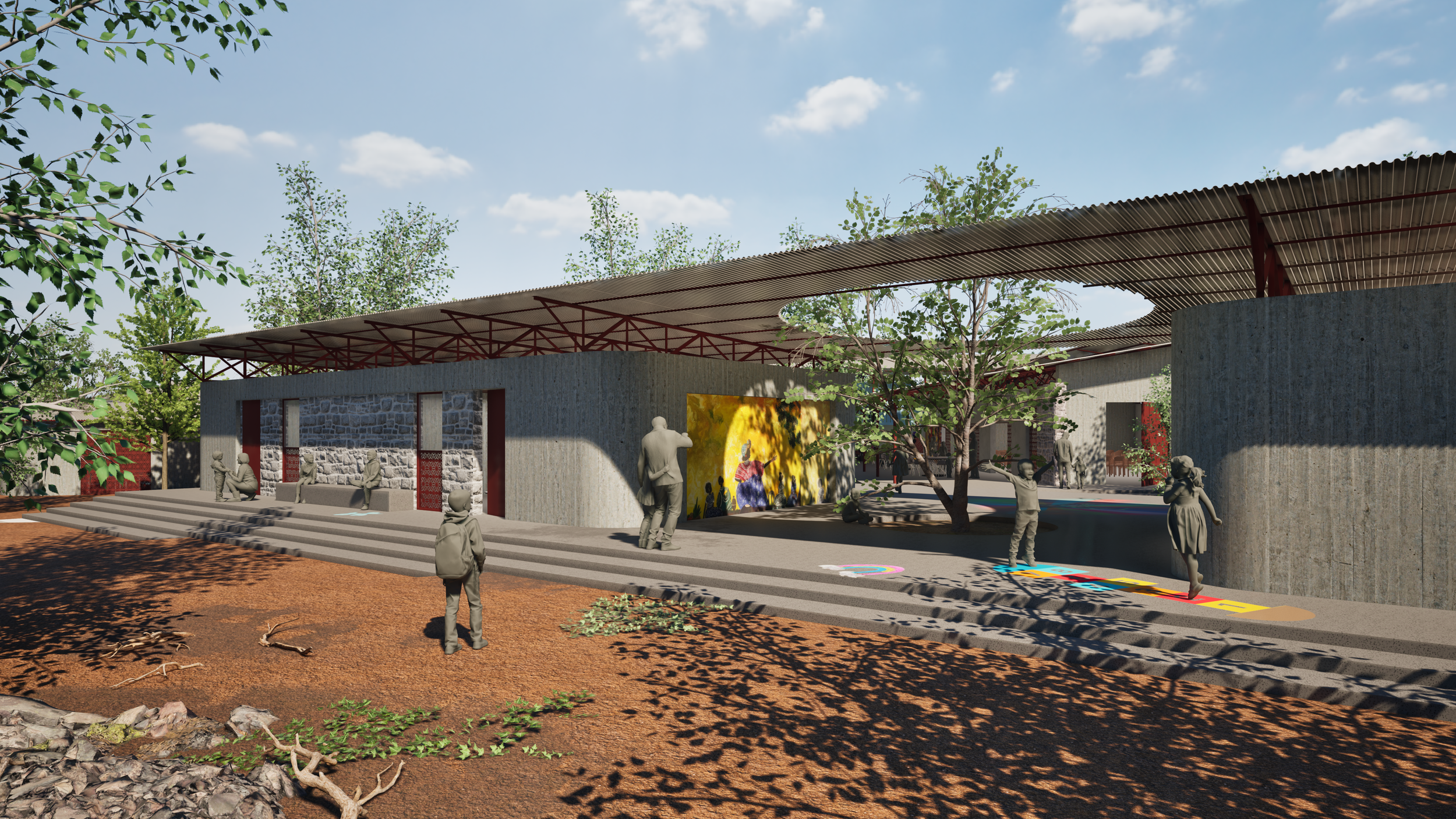
Materiality played a critical role in this conversation. Construction needed to align with what was locally available, and what the local labor force knew how to build. Common materials included concrete masonry units, corrugated metal roofing, and limited wood, which is typically avoided due to termites. At the same time, we were interested in honoring regional building traditions. Through our research, we learned about historical construction methods that used mud mixed with cement with branches acting as reinforcement, resulting in thick walls and softened, curved corners.
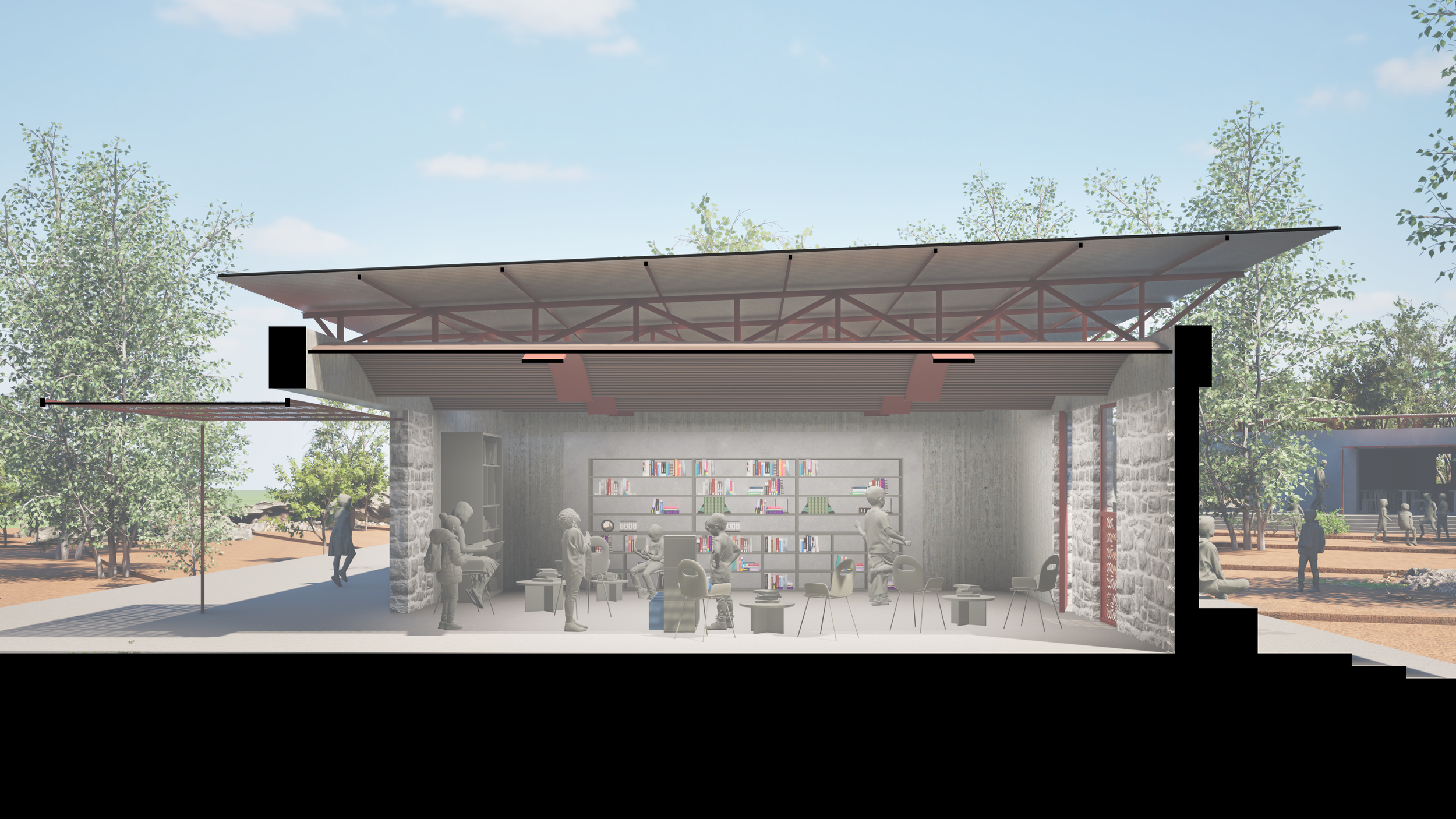
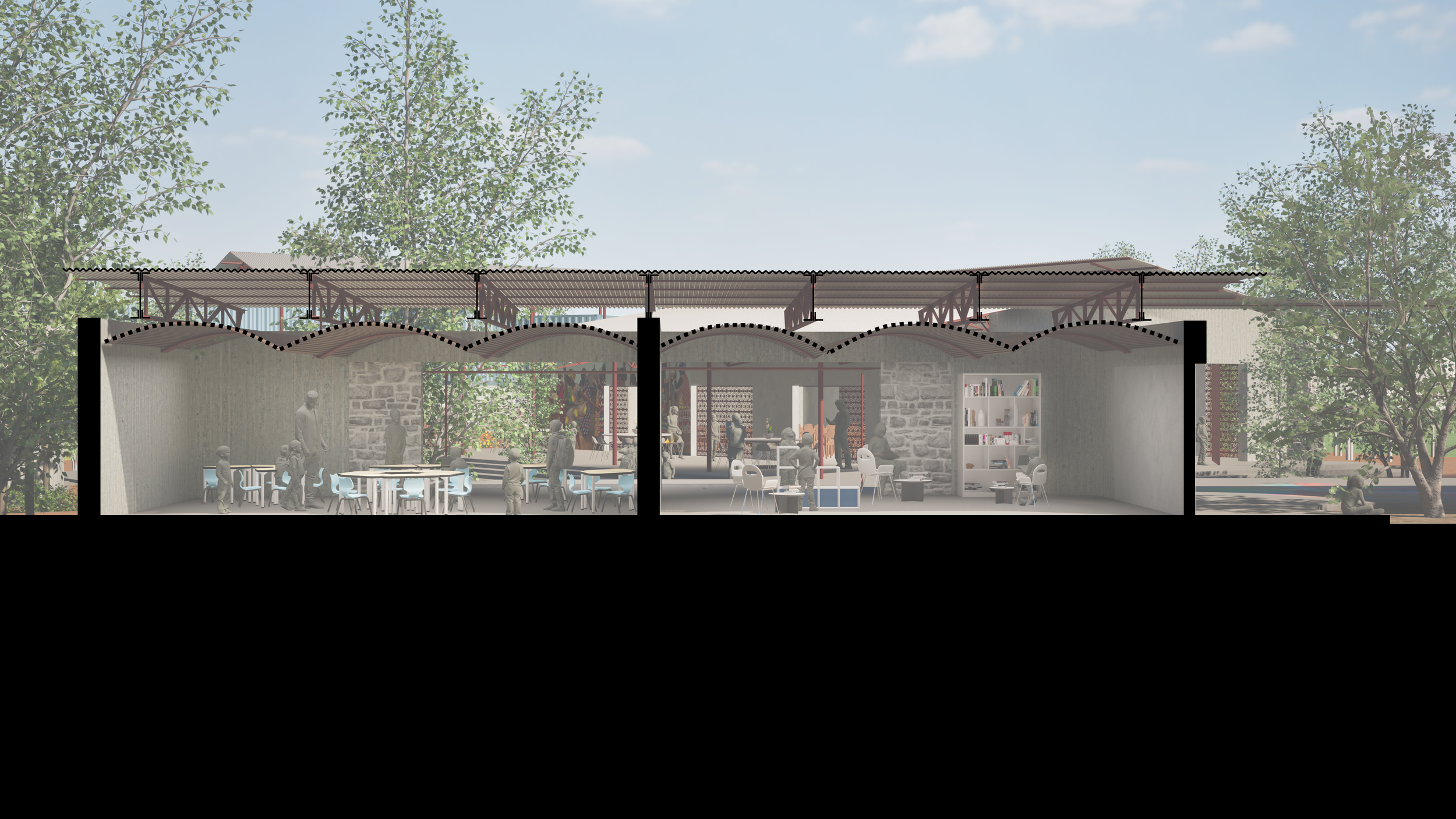
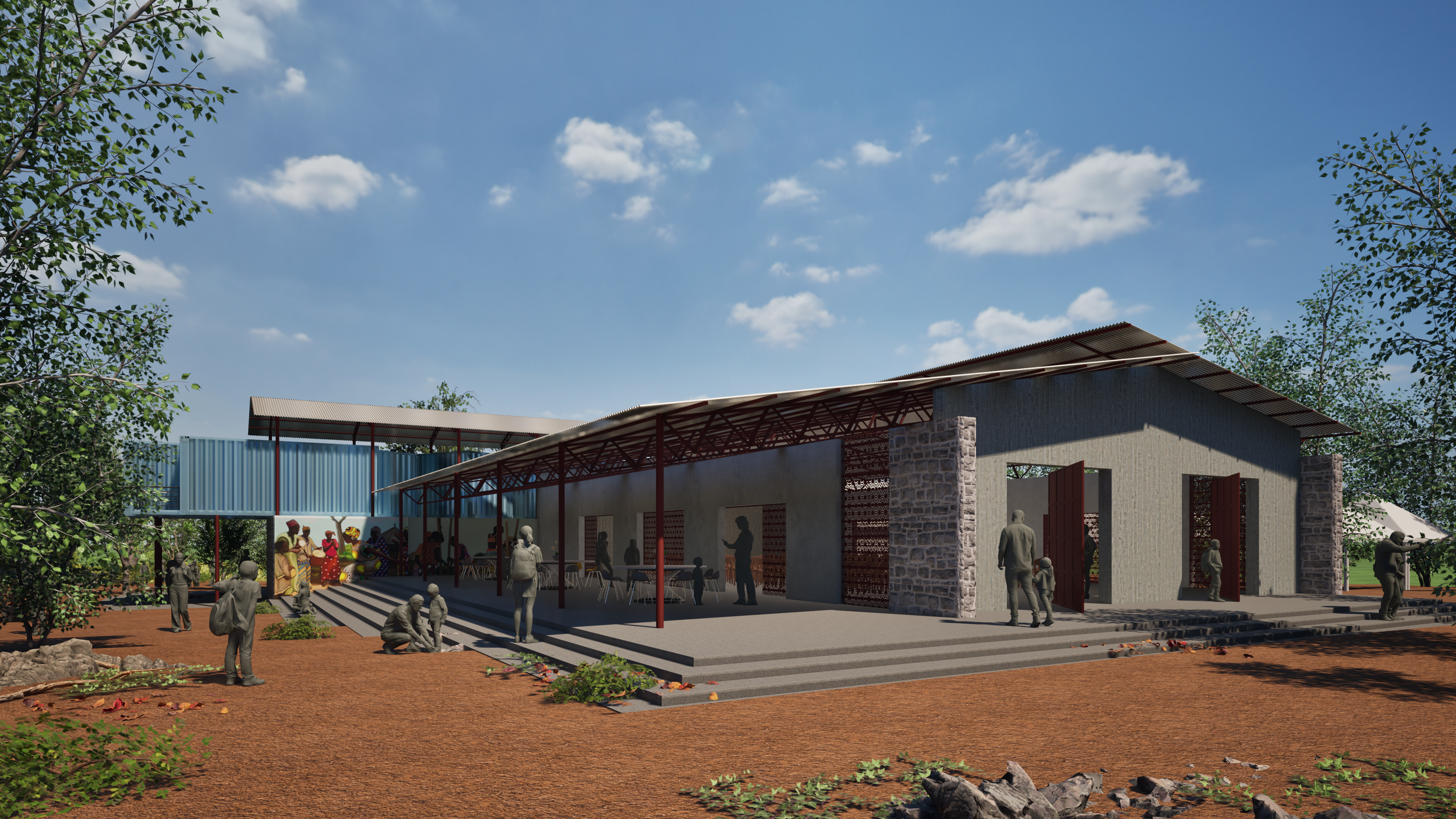
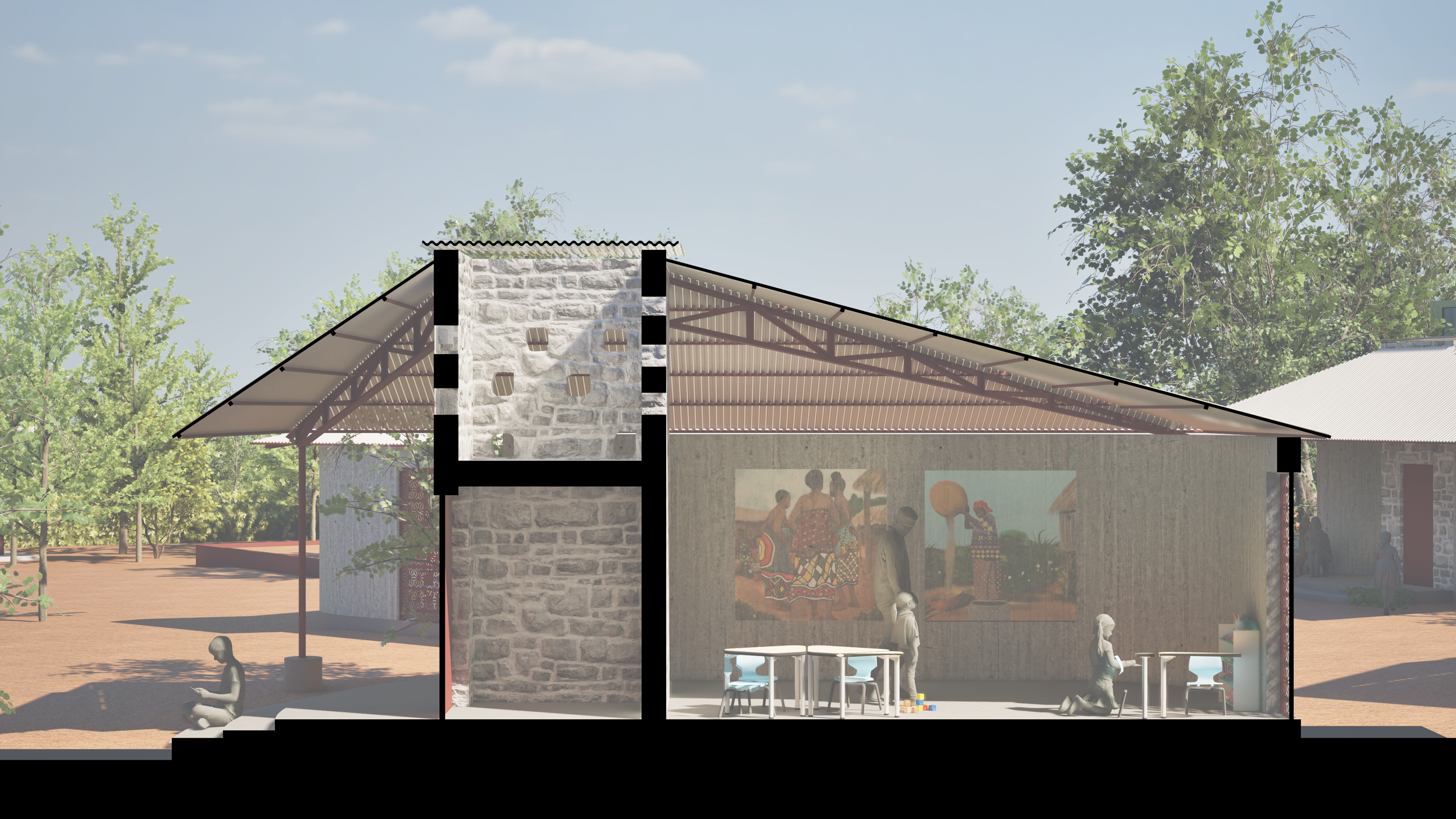
The final design blends these influences. Cast-in-place concrete walls nod to traditional construction techniques while providing durability and longevity. Curved edges reappear as a subtle reference to historical forms, paired with stronger, more contemporary materials. Where possible, we introduced prefabricated elements—such as lightweight steel roof trusses—to simplify construction while still relying on familiar roofing materials like corrugated metal.
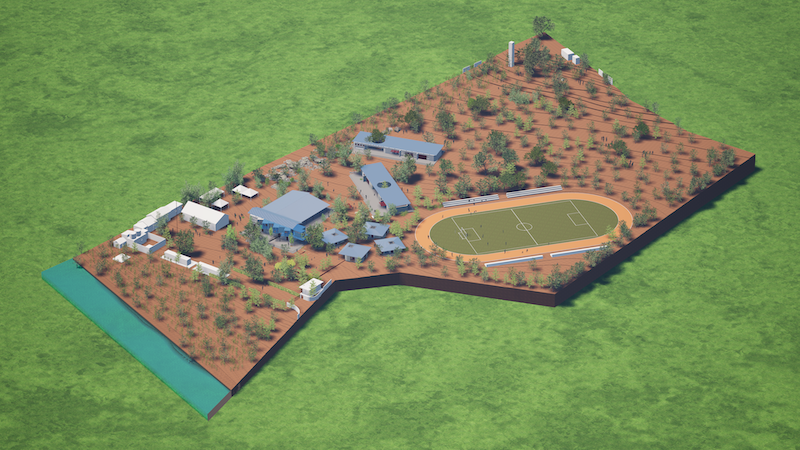
Programmatically, the project grew into a comprehensive master plan for an eight-acre site—one intended to guide development over the next 30 to 40 years. At its heart is a large gathering hall, conceived as both a community anchor and a welcoming threshold for the property. The building opens directly onto shaded outdoor plaza spaces, allowing events to spill outside and creating natural pre-function and overflow areas. Offices and smaller meeting rooms support administrative needs, while a residence is integrated into the complex, enabling the founder to live on-site and remain deeply connected to the daily life of the community.
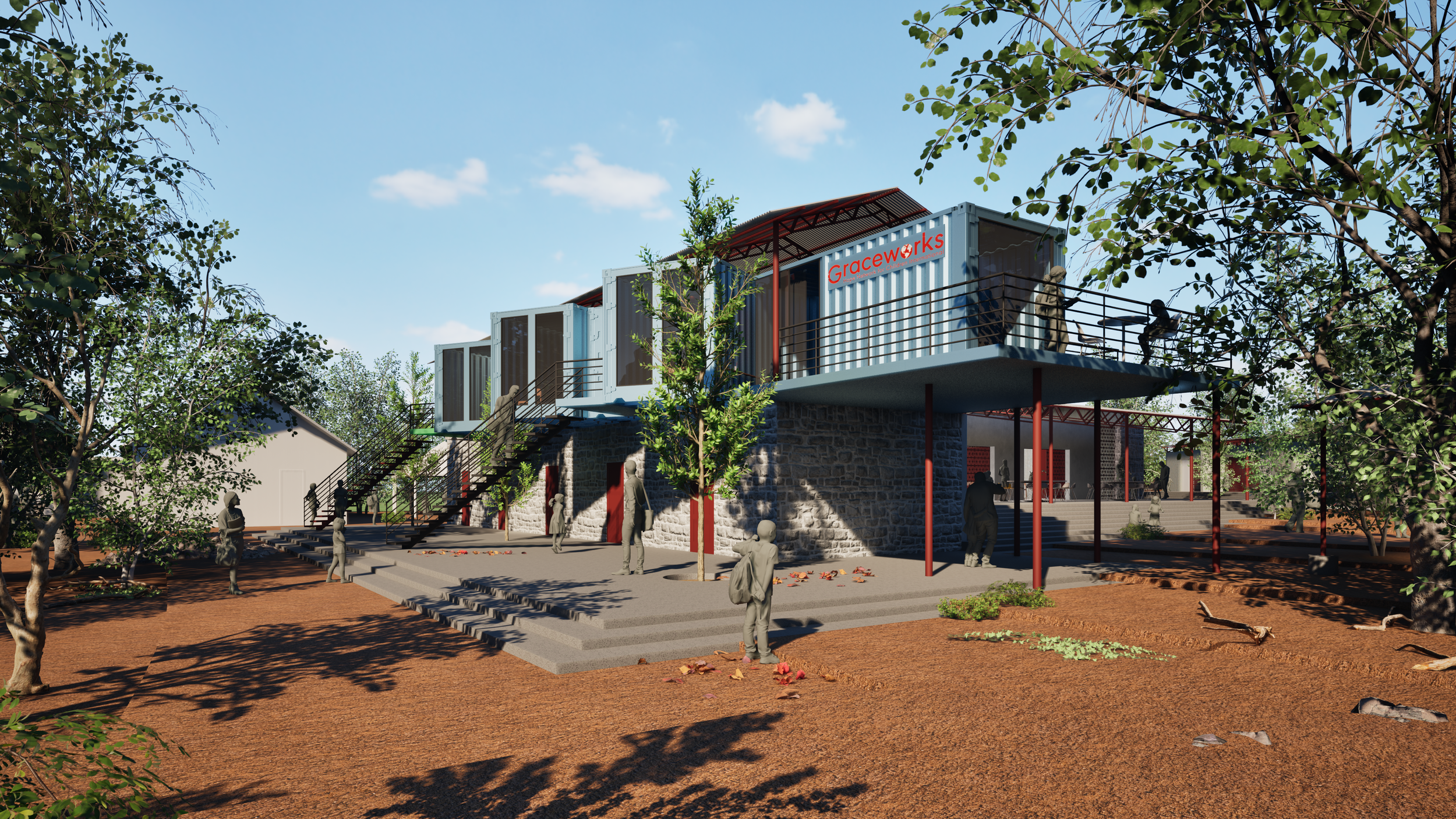
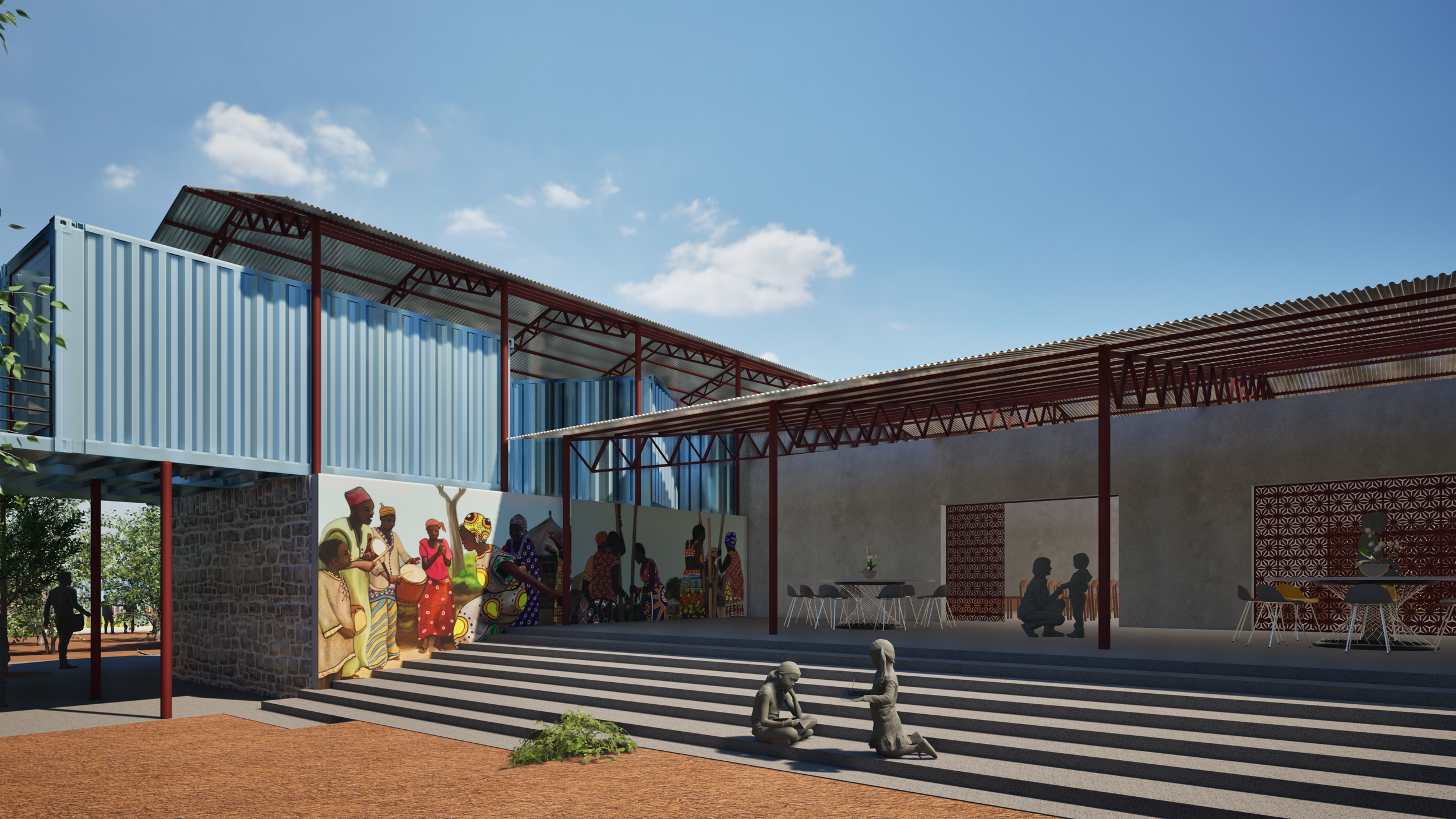
One of the most distinctive design moves in the gathering hall is the use of repurposed shipping containers for the offices and residence. These containers already arrive on site filled with donated supplies—educational materials, health resources, and everyday necessities. Reusing them as part of the architecture adds a meaningful layer to the story of the place. Stacked and angled, they create a dynamic counterpoint to the larger hall, reaching outward toward the site in a gesture that feels both welcoming and expressive. Their painted surfaces offer opportunities for color and vibrancy, reflecting the community’s existing tradition of decorating and personalizing their buildings.
Education buildings are distributed across the site and designed as modular learning centers that can be built over time, depending on available resources. Each learning center is composed of paired classroom spaces connected by a single elevated roof, with open gaps between walls and roof that allow light and cooling breezes to pass through. Large openings blur the boundary between indoors and outdoors, enabling classrooms to double in size when activities extend outside. In several buildings, existing trees are preserved—or new ones planted—so that learning quite literally happens among the trees, making landscape an integral, non-negotiable part of the architecture.
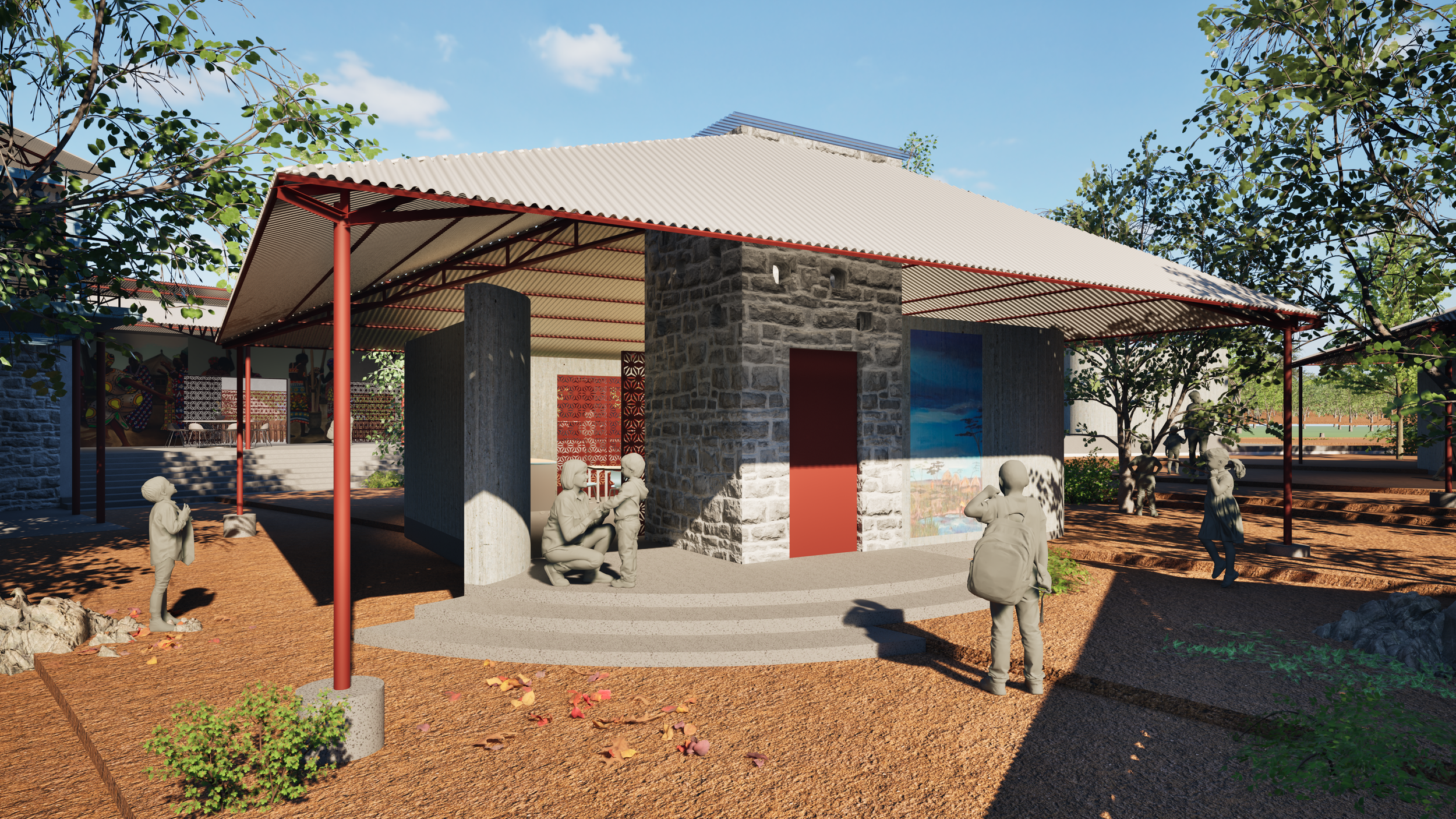
For early childhood education, the approach shifts scale. These spaces are organized as a small village of individual learning pods, each designed to feel protective, human-scaled, and familiar. Inspired by traditional hut forms, the buildings feature pitched roofs, generous overhangs, and ample ventilation. Each pod includes its own restroom and shaded entry, creating a safe and comfortable environment for the youngest children while reinforcing a sense of community and belonging.
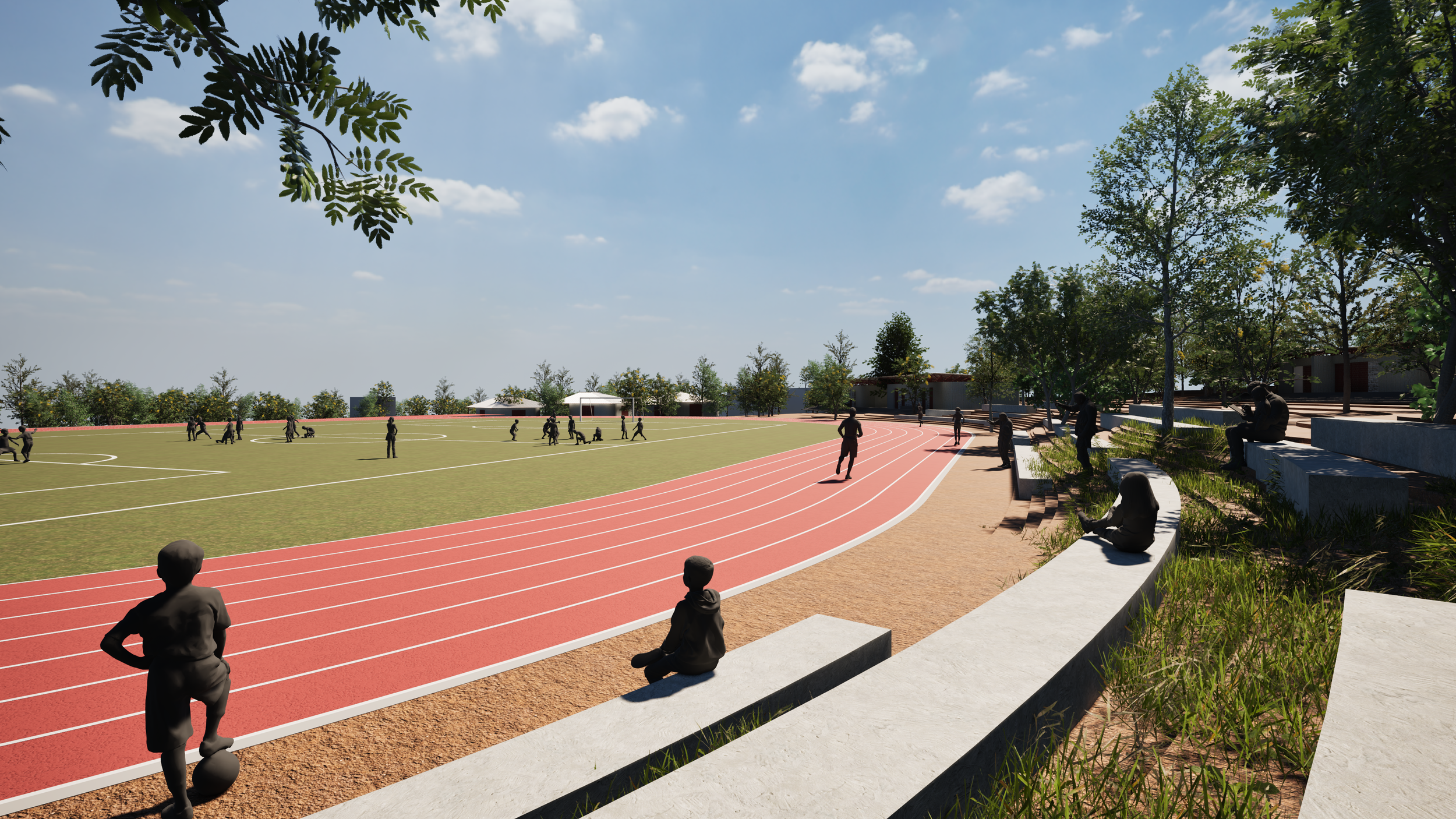
The site itself played a strong role in shaping the master plan. The property slopes gently upward from a stream bed at one end, where the main entrance is located. The gathering hall sits near this entry point, establishing a clear center of gravity as visitors arrive. From there, the campus unfolds uphill, with learning centers, athletic spaces, and future residential areas arranged to respond to topography, vegetation, and long-term growth.
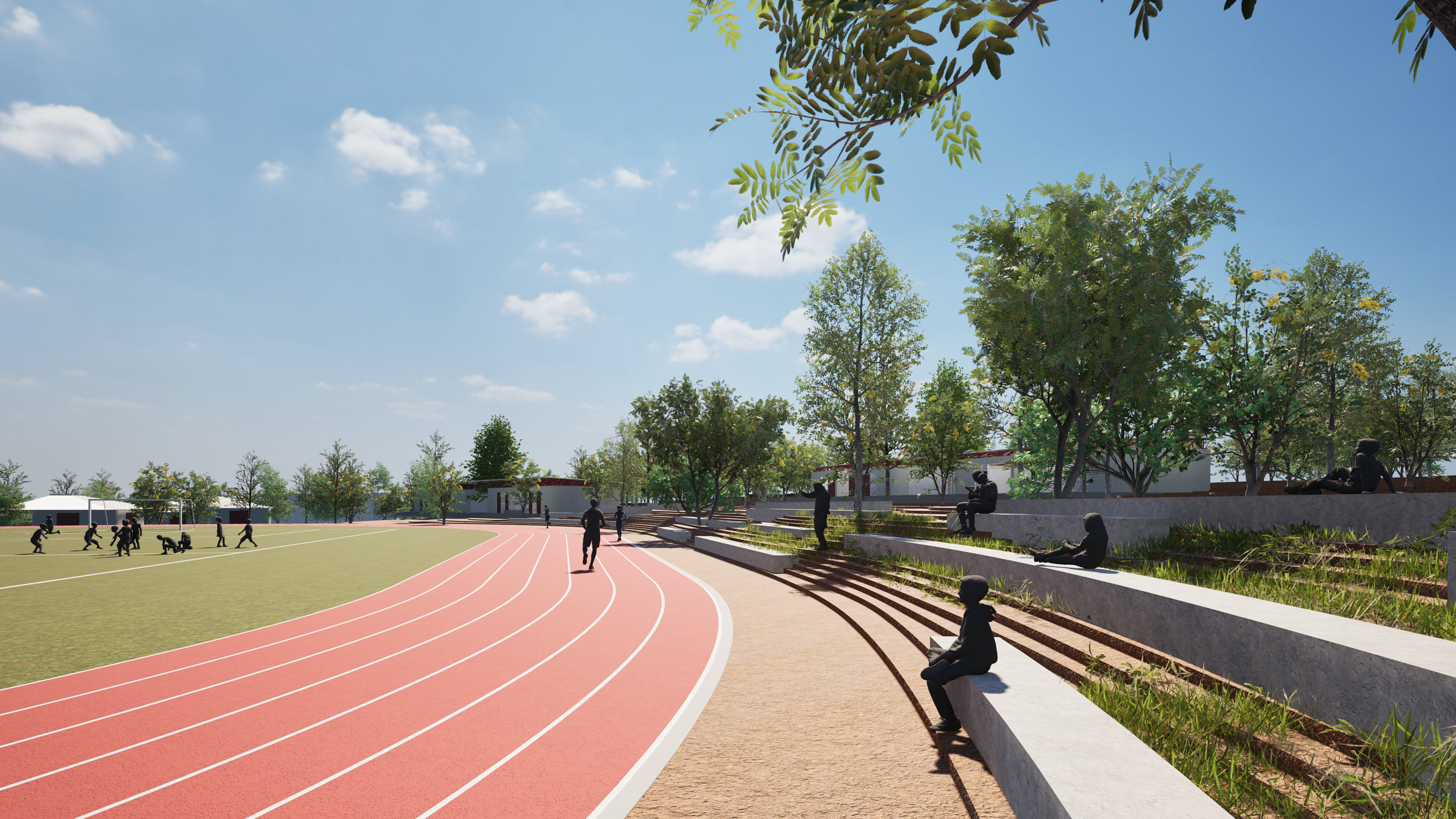
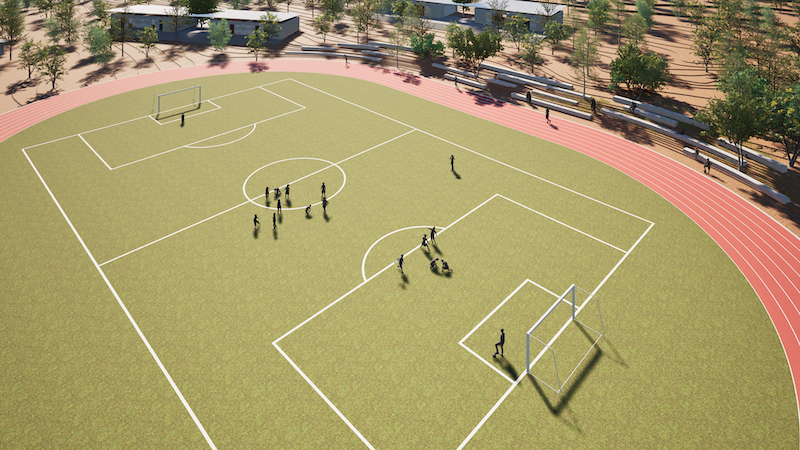
Preserving existing trees was a priority throughout. The modular nature of the buildings allows them to shift position as needed to avoid mature vegetation, reinforcing the idea that architecture should adapt to the land rather than erase it. The athletic field—an important community resource—presented its own challenges, requiring careful placement to minimize grading and tree removal while still creating a usable, flat playing surface. Even here, the goal was to balance necessity with stewardship of the landscape.
Ultimately, this project became an exercise in translating vision into form. It demonstrates how architecture can emerge not from a fixed program, but from listening closely to what a place and its people need. The result is not a single building, but a flexible framework: a master plan and a set of thoughtfully designed structures that give shape to possibility, invite growth over time, and support a community’s aspirations for decades to come.
Location Rwika, Kenya
Client Graceworks
Renderings ITZEN Architects